One Dashboard, Three Platforms: Multi-Platform Management for Local Businesses
Ask a local business owner which social platform their customers use, and you’ll get three different answers before lunch. Grandma’s church group lives on Facebook. The twenty-somethings who fill weekend tables scroll Instagram. And the homeowners bingeing weekend projects are deep on YouTube. Being everywhere at once sounds like the obvious answer — until you try to run it yourself. That’s the reality check most small businesses hit: the audience is spread across three platforms, but the owner has one set of hands and zero spare hours. This is exactly the problem an ai social media manager for small business was built to solve: running Facebook, Instagram, and YouTube from one automated system, without tripling the work.
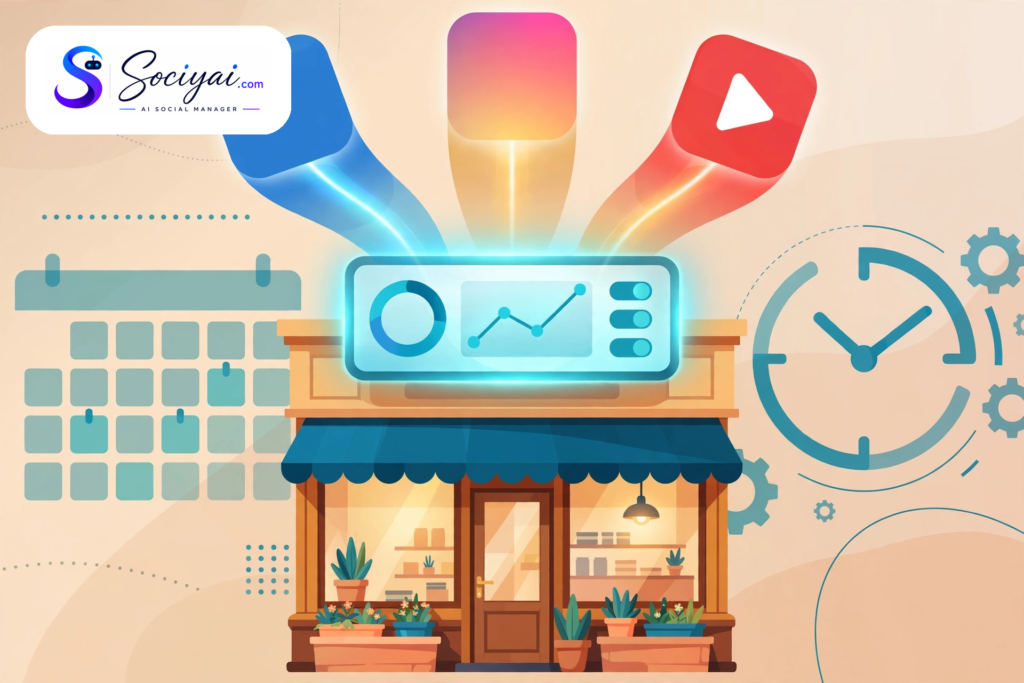
Multi-platform management isn’t about cloning the same post three times and calling it a strategy. It’s about one dashboard that creates, adapts, schedules, and monitors platform-native content for each channel while you run your business. Here’s how it actually works — and what changes once your social presence stops being three separate chores.
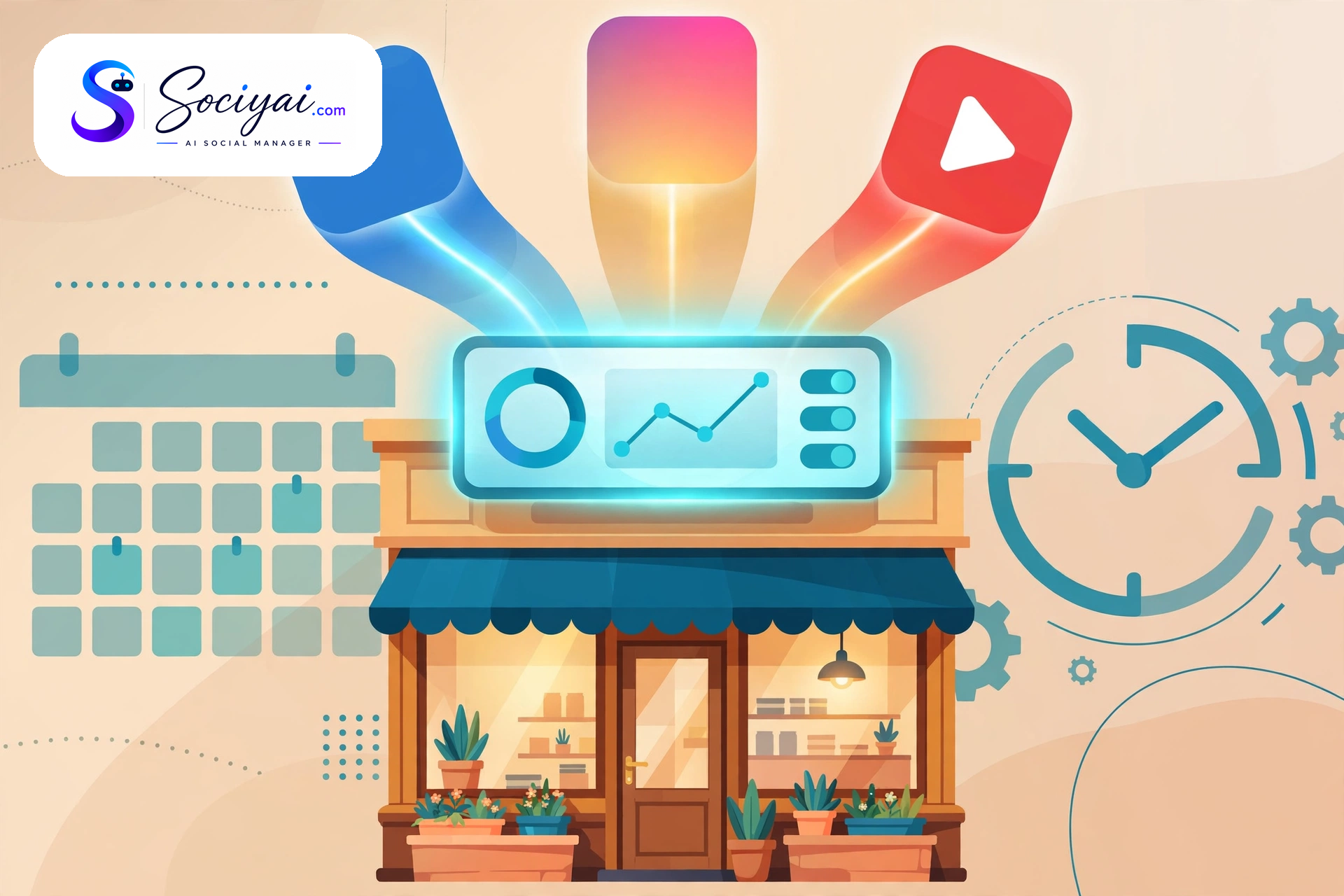
The Triple-the-Work Trap Local Owners Fall Into
The math is brutal. Running three platforms manually means three content formats, three posting rhythms, three comment inboxes, and three sets of analytics to decode. A post that takes twenty minutes to write and format becomes an hour when it needs platform-specific versions. Multiply by a few posts a week and you’ve lost a part-time employee’s worth of hours — except the employee is you, stealing time from actual customers.
Most owners respond by doing one of three things: they pick one platform and go invisible on the other two, they post the identical thing everywhere (which reads as lazy and underperforms), or they hire it out at agency prices. None of these is a real solution. The fix isn’t choosing which audience to abandon — it’s removing the manual labor from being present on all of them. That’s what multi-platform social media management automates: the system treats your three channels as one coordinated presence.
How an AI Social Media Manager for Small Business Unifies Your Content
Under one roof, the workflow runs in three stages: generation, adaptation, and distribution. The AI learns your business’s voice and services first — what you sell, how you talk, who walks through your door. From there, every post idea is adapted for each platform’s native format instead of copy-pasted. A Tuesday promo becomes a warm community-style post on Facebook, a visual-first announcement on Instagram, and a longer-format video concept for YouTube. Same message, three native shapes, zero extra effort from you.
One voice, adapted — not copy-pasted
Algorithms punish identical cross-posting; audiences notice it too. The system keeps your brand voice consistent while reshaping each piece of content for the platform it lands on: caption lengths, hashtag habits, and format conventions are handled automatically. Your followers on each channel feel like the content was made for them, because in a sense it was — just without you making it three times.
The content multiplier effect
Think of it as a multiplier on every idea you already have. A new menu item, a seasonal service, a customer testimonial — one input from your business becomes a full week of coordinated, platform-appropriate posts. The idea-to-everywhere pipeline is the core reason small businesses can finally afford to be on three platforms at once: the effort stays flat while the presence multiplies.
Smart Scheduling Across Three Different Audiences
Here’s the part manual posting almost always gets wrong: the best time to post on Facebook is not the best time to post on Instagram, and neither matches YouTube. Your Facebook followers check in over morning coffee; your Instagram audience scrolls in the evening; YouTube viewers binge on weekends. Posting everything at 10 a.m. because that’s when you had a free minute means two of your three audiences never see it at their best.
A smart scheduling engine maintains a separate timing model for each platform, learned from your actual audience’s behavior and your own post history. The same announcement can go out Tuesday morning on Facebook and Wednesday evening on Instagram — each at its own optimal moment. You set the cadence once (daily, three times a week, whatever fits), and the engine fills every slot with freshly generated content at platform-native times. The timing decisions that used to eat your evenings simply disappear from your life.
Stay in the Loop Without Living in the Apps
Automation that goes dark is a trust problem. Owners want to know what’s going out in their name — they just don’t want to micromanage it. The answer is a lightweight approval layer: smart notifications that surface each drafted post for a quick approve-or-edit checkpoint. Many owners build a five-minute morning ritual: coffee in one hand, a glance at the day’s queued posts, one tap to approve, done.
This human-in-the-loop design is what makes multi-platform automation feel safe. The AI does the creating, adapting, and scheduling; you keep final say. Nothing publishes that you haven’t had the chance to see, but on busy days — the days you’d have skipped posting entirely — the queue keeps working. Comments and messages across platforms are also flagged in one place, so customer questions never rot unanswered in an inbox you forgot you had.
Real-World Examples: A Day on Autopilot Across Three Platforms
Picture a family-owned auto repair shop. Monday morning, the AI posts a maintenance-tip graphic on Facebook aimed at the commuters who follow the page — winter tire reminders in October, AC checks in May. The same theme lands on Instagram as a short visual: a clean before-and-after of an engine bay, tagged with neighborhood hashtags. On YouTube, it’s a two-minute clip of the owner explaining what that dashboard warning light actually means. One idea, three native posts, all published at each platform’s best time while the team is under cars.
Or take a local salon. A stylist’s new color special becomes a Facebook event-style announcement for the loyal regulars, an Instagram carousel showing the transformation, and a YouTube short of the blowout reveal. The salon owner approved all three from a phone notification between appointments. Bookings from social referrals rise — not because she hired a marketing team, but because her presence finally matches where her customers actually are.
What an AI Social Media Manager for Small Business Handles That You Shouldn’t
The point of automation isn’t to make owners lazier — it’s to move human attention to where it actually matters. The system quietly owns the repetitive machinery:
- Format conversion. One idea becomes platform-native posts without you reformatting anything.
- Per-platform timing. Each channel posts when its audience is active, not when you had a gap.
- Consistency. Daily or multi-weekly posting keeps happening through busy seasons, holidays, and vacations.
- Inbox triage. Comments and messages from three platforms land in one view for quick replies.
- Performance tracking. The AI reports what’s working per platform and adjusts the mix over time.
What stays with you: the five-minute review, the occasional personal touch (a genuine thank-you post will always outperform a generated one), and the strategic calls only an owner can make — which services to push this month, which story to tell. Automation handles the machinery; you keep the soul of the brand.
The Compounding Effect: Why Three Platforms Beat One
Here’s the part that surprises owners most: being on three platforms doesn’t just add reach, it multiplies it. Each platform reaches a slightly different slice of your local market, and consistent presence across all three builds a familiarity that no single channel can deliver. Customers see your name on Facebook, notice your Instagram stories, and stumble onto your YouTube tips — by the time they need your service, you’re already the familiar choice.
Consistency compounds, too. A year of automated daily posting across three channels is roughly a thousand touchpoints you never had to make manually. Chasing viral hits can’t compete with that steady drumbeat, and no owner has the bandwidth to keep it up by hand. That’s the real promise of one-dashboard management: the kind of marketing volume that used to require a team, running quietly in the background of a business that has better things to do.
If your customers are split across Facebook, Instagram, and YouTube — and they are — you don’t need three times the marketing effort. You need one system that treats your presence as a single, coordinated operation. Set your voice, set your cadence, and let the automation be everywhere you’re too busy to be.
Related Resources
- Sociyai AI Features — Explore the full feature set behind automated social media management, including smart scheduling, the AI post generator, smart notifications, analytics, and more.